Once a developer holds approved plans, options narrow fast.
On April 15, developers of a proposed data center in East Whiteland Township arrived at a board of supervisors meeting with a scaled-back plan. CEO Josh Rabina of Sentinel Data Centers told the board that if approvals were delayed or appeals continued, the company would build the bigger version it had already secured.
“The approved plan,” he said, “is functional, it’s profitable, it’s vested, and it gives us certainty.”
Peter Fixler of the Township’s board of Supervisors was blunt in his opening remarks. “What is in front of (us) tonight is not a ‘yes’ or ‘no’ decision,” he said. “It’s the decision on which data center plan we would like to see built, because a data center will be built on the site.”
The board is expected to vote on the revised 887,000 square foot version on April 21.
Residents showed up to the meeting in matching “Save East Whiteland” shirts. One told the developers their scaled-back proposal was not an act of goodwill but “a poor attempt in acting like you care about our township.”
Working with municipalities on a daily basis, I can vouch that no board member wants to be in that room.
What a Data Center Actually Means for a Community
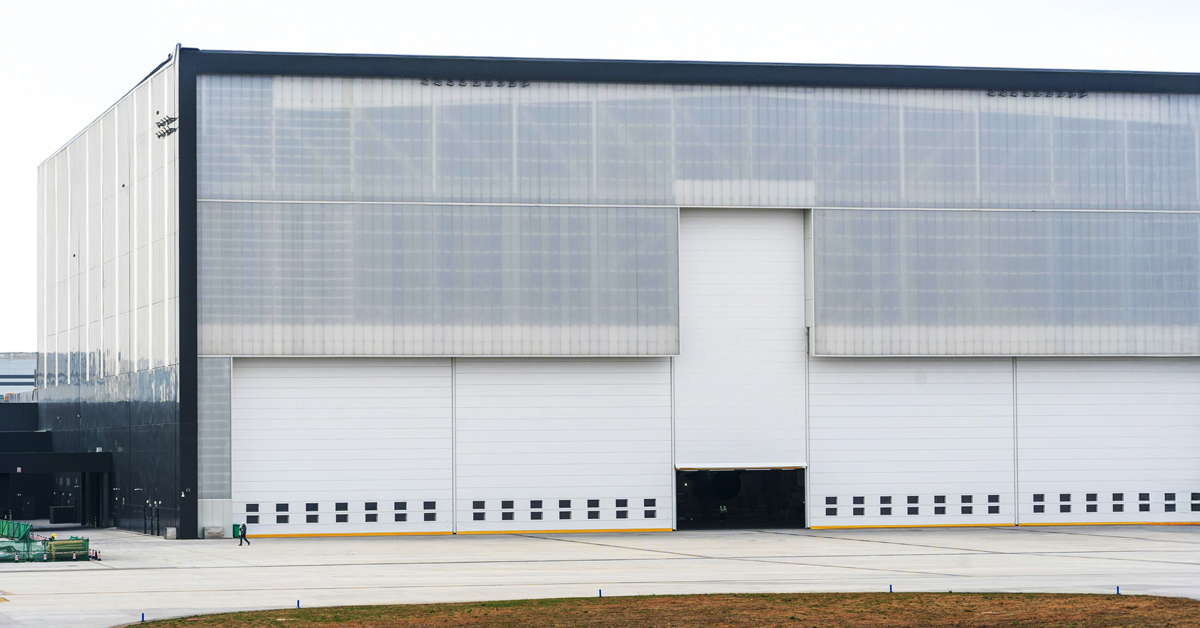
While a data center looks like a warehouse from the outside, inside, it runs servers around the clock to process and store data.
Demand for these facilities has surged with the growth of cloud computing and AI. Developers are increasingly eyeing suburban land with access to more power lines, fiber, and water.
A data center’s needs are significant. The Chester and Montgomery County Planning Commissions recently published a joint Data Center Ordinance Guide. It notes that data centers recently proposed in the region could consume 100 megawatts of power or more combined. That is roughly equivalent to the energy use of Scranton.
Cooling systems can consume millions of gallons of water per day in the summer. Equipment and backup generators run constantly and combined can produce a loud, consistent hum, which is often louder at night.
All of this can equal some unhappy neighbors. But what can be done about it?
This issue is no longer a matter of “if” but “when” for southeastern Pennsylvania suburbs. It’s on many municipal agendas right now, and most local ordinances are not equipped to handle it.
The Legal Problem Most Municipalities Don’t Know They Have
Most local zoning ordinances were written long before data centers existed as a recognized land use. When an application arrives, a municipality may not have a clear answer to basic questions. Is this a permitted use in the zone? Does it need a conditional use hearing? What conditions can be imposed?
According to the Philadelphia Inquirer’s April 15 report, Sentinel Data Centers secured original approvals between 2018 and 2024. When they returned recently seeking approval for a 1.6 million square foot expansion, residents packed meeting rooms. The board of supervisors found itself not deciding whether a data center would be built, but which version.
That is what happens when zoning does not get ahead of the use.
Chester and Montgomery County Planning Commissions released their guide to help municipalities avoid exactly this. They recommend treating large-scale data centers as a conditional use.
A conditional use is permitted in designated districts only when the applicant meets specific standards written into the ordinance. Failing those standards gives the municipality grounds to deny approval. They also recommend running conditional use and land development applications at the same time. This allows elected officials to see the full picture.
What Municipalities Should Do Now
If data centers are not addressed specifically, a municipality could be exposed. The Chester and Montgomery County Planning Commissions’ guide includes model ordinance language. It covers noise limits, setback requirements, energy demand testing, water consumption caps, and environmental impact analysis.
I recently drafted a resolution of opposition for a Montgomery County borough to address just this issue. A neighboring township was potentially approving a data center close to the township/borough line, and the data center’s presence will affect the borough just as much as the township. The borough was smart to be preemptive about what can and will be acceptable when it comes to data centers.
Amendments adopted before an application arrives carry real legal weight. Amendments written in reaction to a pending application are far harder to defend. Pennsylvania municipalities would be wise to address it now.
Paige S. DiCamillo is an attorney in the Municipal Law group at High Swartz LLP. She can be reached at pdicamillo@highswartz.com or 610-275-0700. This article is for informational purposes and does not constitute legal advice.